Red Blue Aztec Digital Papers: A Practical Guide to Elevating Your Craft Projects
When you are looking for a design element that commands attention without overwhelming the senses, Red Blue Aztec Digital Papers offer a compelling solution. The bold contrast of crimson and cobalt against geometric heritage patterns creates a visual rhythm that works beautifully across a wide spectrum of creative endeavors. Whether you are a seasoned graphic designer preparing assets for a client or a hobbyist wrapping a special gift, understanding the technical and aesthetic nuances of these digital assets is crucial for achieving professional results.
Many creators overlook the importance of file specifications when purchasing digital papers, often leading to frustrating experiences during printing or digital editing. This guide aims to clarify what makes this specific set of 12 seamless patterns valuable, while highlighting common pitfalls to avoid when integrating them into your workflow.
Understanding the Value of Seamless Patterns
The term "seamless" is not just marketing jargon; it defines the functionality of the asset. A seamless pattern repeats infinitely without visible breaks, allowing you to tile the image over any surface area. This is particularly important for applications like tumbler wraps or large background designs where continuity is key. If a pattern is not truly seamless, you will end up with awkward lines or misalignments that can ruin the polished look of your final product.
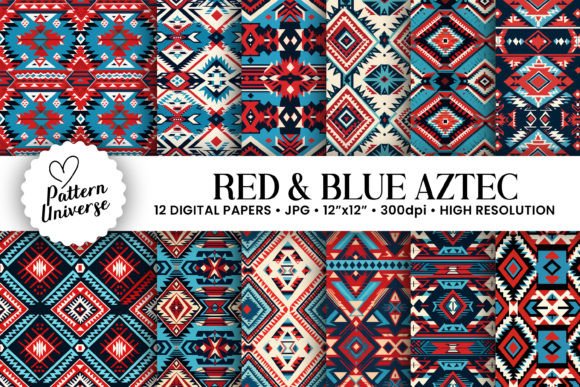
Red Blue Aztec Digital Papers come as a curated collection within a single zip file. This organization is practical, ensuring that all variations of the theme are kept together. The set includes 12 distinct high-resolution files, each offering a unique variation on the Aztec motif using the specified color palette. For entrepreneurs creating branded merchandise or bloggers designing custom headers, having access to multiple variations allows for A/B testing different looks without needing to source new assets repeatedly.
Technical Specifications Matter More Than You Think
One of the most frequent mistakes beginners make is ignoring resolution and dimensions before downloading or purchasing. Low-quality digital papers often appear pixelated or blurry when scaled up, which is disastrous for print projects. To ensure your work stands out, you must verify the technical specs.
This particular collection addresses those concerns directly:
- High-Resolution Quality: All files are provided at 300dpi (dots per inch). This is the industry standard for high-quality printing. At this density, the intricate details of the Aztec geometry remain sharp and crisp, even when printed on larger formats.
- Optimal Dimensions: Each file measures 3600 x 3600 pixels, which equates to 12″ x 12″ at 300dpi. This is the standard size for scrapbooking and many commercial printing services. It provides enough detail for close-up inspection while being manageable in file size for digital use.
If you encounter digital papers advertised as "high quality" but lack these specific metrics, proceed with caution. A file that is only 72dpi might look fine on a screen but will result in a muddy, low-definition print. By choosing assets like Red Blue Aztec Digital Papers that explicitly state their resolution, you save yourself the cost and time of re-doing a project due to poor output quality.
Avoiding Common Application Mistakes
Even with high-quality assets, errors in application can compromise the final result. Here are some practical corrections to keep in mind when working with these patterns.
Misjudging Scale and Repetition
A common error is failing to preview how the pattern repeats on your intended canvas. In software like Photoshop or Illustrator, always check the "Pattern Overlay" settings. Sometimes, the edges of a digital paper do not align perfectly if the original creation had minor inconsistencies. While these AI-generated patterns are designed to be perfect, it is wise to zoom out and view the full tiled effect before committing to a print or export.
Better Approach: Create a test square that is twice the size of your desired output. Apply the pattern and inspect the seams closely. If you see a break, adjust the offset settings until the flow is natural. This small step prevents costly waste on materials like vinyl for tumbler wraps or cardstock for invitations.
Ignoring Color Profiles
Digital screens use RGB color mode, while printers use CMYK. Red and blue are vibrant colors that can shift significantly when converted from screen to print. A bright neon red on your monitor might print as a dull maroon if the color profile is not managed correctly.
Better Approach: Always convert your documents to CMYK before sending them to a professional printer. Check the saturation levels of the red and blue hues. If the colors appear too intense, slightly desaturate them in your editing software to ensure they translate accurately to physical media. This attention to detail ensures that the bold aesthetic of the Aztec design remains impactful in the real world.
Expanding Use Cases Beyond Gift Wrapping
While gift wrapping is a popular use case, limiting your imagination to just paper crafts misses the versatility of these digital papers. The 12″ x 12″ format is incredibly adaptable.
- Greeting Cards and Invitations: Use the patterns as full-page backgrounds or as decorative borders. The strong geometric lines provide a modern twist on traditional invitation designs, suitable for weddings, birthdays, or corporate events.
- Tumbler Wraps: The seamless nature of the patterns makes them ideal for wrapping around cylindrical objects. Ensure you account for the circumference of your tumbler when scaling the pattern in your design software to avoid distortion.
- Social Media Graphics: Bloggers and marketers can use these textures as overlays or background elements for Instagram posts or Pinterest pins. The high contrast grabs attention in a crowded feed, driving higher engagement rates.
- Scrapbooking: For physical scrapbookers, the 300dpi resolution ensures that photos placed on top of these backgrounds will have a clean, professional foundation without competing with a grainy texture.
Evaluating Your Purchase Decision
Before adding Red Blue Aztec Digital Papers to your cart or downloading the zip file, take a moment to assess your specific needs. Ask yourself if you require the exact 12″ x 12″ dimensions or if you need vector scalability. While raster images at 300dpi are excellent for print, they cannot be enlarged indefinitely without loss of quality. If you plan to create massive billboards, you might need vector versions instead.
However, for the vast majority of craft projects, social media content, and standard print jobs, this resolution is more than sufficient. The inclusion of 12 variations in one package offers excellent value, providing enough variety to maintain visual interest across a series of projects without cluttering your hard drive with redundant files.
Final Thoughts on Execution
Success in digital crafting comes down to preparation and precision. By choosing high-resolution assets like Red Blue Aztec Digital Papers, you are setting a solid foundation for your work. Avoid the trap of cutting corners on file quality, and always test your patterns before finalizing large orders.
Take the time to explore the different ways these patterns can enhance your projects. Experiment with layering, opacity adjustments, and color overlays to create unique effects that go beyond simple background usage. With the right tools and a mindful approach to execution, you can produce stunning, professional-grade designs that resonate with your audience. Thanks for stopping by, and happy creating!